Imagine a world where your toaster knows exactly how brown you like your toast, and your fridge can order groceries before you even realize you’re out of milk. Welcome to the realm of 5G and the Internet of Things (IoT), where everything from your car to your coffee maker is connected and smarter than ever.
Overview of 5G Internet of Things
5G technology significantly enhances the capabilities of Internet of Things devices. Expanded bandwidth allows a vast number of devices to connect simultaneously without compromise. Devices like smart refrigerators, thermostats, and security cameras benefit from reduced latency, ensuring real-time communication.
With 5G’s high data rates, IoT applications reach new heights of efficiency. Industries leverage this technology for smarter manufacturing processes, optimizing supply chain management and predictive maintenance. Smart cities emerge, utilizing connected sensors for improved traffic management and energy efficiency.
5G supports a broader range of devices due to its ability to connect low-power, wide-area devices. This advantage encourages growth in various sectors, such as agriculture where smart sensors monitor soil conditions and automate irrigation. Healthcare also benefits with remote patient monitoring through connected wearables, improving patient care.
The improved speed and reliability of 5G ensure that even high-bandwidth applications operate seamlessly. Autonomous vehicles rely on constant data exchange for navigation and safety, exemplifying how 5G enables innovative solutions. Additionally, advancements in augmented reality depend on this technology to provide immersive experiences in gaming and training.
Both businesses and consumers will experience enhanced convenience and efficiency as IoT systems become more integrated into daily life. The potential for personalized experiences expands, as devices adapt to user preferences dynamically. As more products enter the market, 5G IoT can redefine interactions with technology, elevating everyday tasks to a new standard of connectivity.
Benefits of 5G Internet of Things

5G technology brings a multitude of benefits to the Internet of Things ecosystem, enhancing both connectivity and data management.
Enhanced Connectivity
Enhanced connectivity stands as a cornerstone of 5G capabilities. Numerous devices can operate simultaneously without connectivity issues. Smart appliances, industrial equipment, and connected vehicles all benefit from this increased capacity. Real-time communication upgrades user experience and optimizes system efficiency. Businesses gain advantages in operations through seamless integration of devices, which leads to innovations in smart cities and automated manufacturing processes. Users enjoy more responsive applications and services, thus modernizing everyday experiences.
Improved Data Speeds
Improved data speeds characterize the 5G experience. With speeds that can reach up to 10 Gbps, applications function seamlessly across diverse fields. Autonomous vehicles require rapid data exchange to navigate safely, while healthcare relies on instant communication for remote monitoring. Augmented reality applications thrive on high-speed connections, transforming entertainment and training experiences. Users experience reduced buffering times, allowing for continuous streaming and real-time interactions. Overall, this increased speed empowers industries to implement solutions that were not feasible in earlier generations of technology.
Challenges and Limitations
5G technology presents several challenges and limitations impacting its adoption within the IoT ecosystem. Understanding these issues is crucial for stakeholders aiming to implement effective solutions.
Infrastructure Requirements
Significant infrastructure investments are essential for deploying 5G networks. Towers, antennas, and backhaul connections need upgrades to accommodate the increased bandwidth capabilities. Urban environments face additional obstacles due to space constraints limiting tower installations. Rural areas encounter unique challenges, as network coverage often lags behind urban counterparts. These infrastructure demands might slow the rollout of 5G services, creating disparities in IoT connectivity across regions.
Security Concerns
Security risks present a crucial challenge in 5G IoT deployment. Increased connections among devices expand the potential attack surface, attracting cyber threats targeting vulnerabilities. Data privacy becomes a pressing issue as interconnected devices transmit sensitive information. Developing effective security protocols and encryption measures is vital for protecting user data. Manufacturers and service providers must collaborate to enhance security standards, ensuring safe communication among devices in this rapidly evolving connected landscape.
Applications of 5G Internet of Things
5G technology opens up numerous applications within the Internet of Things, driving innovation across various sectors.
Smart Cities
Smart cities utilize 5G to integrate advanced technology into urban infrastructure. Sensors placed throughout cities collect data on traffic flow, air quality, and energy use. Real-time data helps city planners to optimize traffic signals, enhancing the movement of vehicles and pedestrians. Connected streetlights adjust brightness based on environmental conditions, contributing to energy efficiency. Emergency response systems also benefit, as improved communication enables quicker deployment of services. Citizens can engage with smart apps that provide real-time updates, fostering a more connected community. Additionally, smart parking solutions guide drivers to available spots with ease. All of these advancements reflect a significant shift toward sustainable urban environments.
Industrial Automation
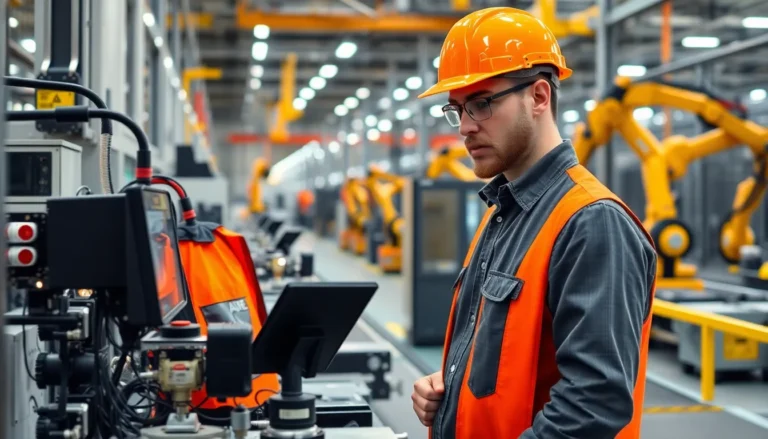
Industrial automation experiences a transformation with 5G technology. Machines and equipment connect seamlessly, allowing for better communication across production lines. This instant connectivity reduces downtime, resulting in increased operational efficiency. Automated guided vehicles transport materials with precise navigation, optimizing logistics in warehouses. Predictive maintenance becomes a reality, as sensors monitor equipment health and alert operators before failures occur. Enhanced data analytics capabilities support decision-making processes, driving productivity. In manufacturing, robotics perform tasks with greater accuracy due to reduced latency. Overall, industries harness 5G IoT to innovate processes and lead to higher quality outputs.
Future Prospects of 5G Internet of Things
5G Internet of Things is poised to revolutionize various industries. Enhanced connectivity will allow farms to utilize smart agriculture solutions, enabling real-time soil monitoring and crop management. In healthcare, remote patient monitoring through connected wearables is expected to improve patient outcomes significantly.
Autonomous vehicles will rely heavily on 5G for seamless communication with infrastructure and other vehicles. Reduced latency means these vehicles can respond instantly to changes in their environment, ensuring safer travel. Smart cities will also thrive under 5G, with cities better equipped for traffic management through connected sensors monitoring flow patterns.
Additionally, industries like manufacturing can expect smarter processes. Predictive maintenance powered by real-time data will minimize downtime, leading to higher efficiency and productivity. Companies leveraging augmented reality for training and maintenance will find 5G’s high data speeds instrumental in delivering immersive experiences.
Emerging markets in energy will capitalize on 5G-enabled IoT devices. Optimized smart grids will enhance energy efficiency and sustainability, helping combat climate change. Retail environments might see transformations with more personalized shopping experiences as consumers interact with smart devices.
Expansion of 5G networks will face challenges, including infrastructure investments. Urban areas often struggle with space for new towers while rural settings may experience delayed coverage. Security measures must evolve concurrently to address increased cyber threats linked to the growing number of devices.
Despite these challenges, the upside of 5G IoT is significant. Enhanced user experiences and operational efficiencies across sectors stand to reshape interactions with technology, ushering in an era of unprecedented connectivity.
The integration of 5G technology with the Internet of Things is paving the way for a smarter and more connected future. As everyday devices become increasingly intuitive and capable of real-time communication, both consumers and businesses stand to gain significantly. Enhanced connectivity not only improves efficiency but also transforms daily tasks into seamless experiences.
While challenges exist in terms of infrastructure and security, the potential benefits far outweigh the drawbacks. Industries are poised to revolutionize operations through smarter manufacturing, optimized supply chains, and innovative healthcare solutions. With 5G IoT, the landscape of technology is evolving rapidly, promising a future where connectivity enhances every aspect of life.