
Imagine a world where your toaster knows exactly how many slices of bread you want, and your fridge can remind you when you’re running low on milk. Welcome to the Internet of Things (IoT), where ordinary objects become extraordinary through connectivity. The architecture behind this digital wonderland is not just a bunch of fancy wires and protocols; it’s the backbone that makes smart living possible.
Overview of Internet of Things Architecture
Internet of Things architecture consists of several key components that facilitate the seamless functioning of connected devices. First, devices feature embedded sensors that collect data in real-time. These sensors enable smart appliances to monitor their surroundings and gather valuable insights.
Data processing occurs at multiple levels. Edge computing takes place at the device or local server level, allowing for immediate responses to sensor data. In contrast, cloud computing handles more extensive data analysis and storage, ensuring long-term accessibility and integration.
Communication protocols play a significant role in IoT architecture. These protocols include MQTT, CoAP, and HTTP, ensuring reliable data transmission between devices, gateways, and cloud services. Each protocol serves different purposes based on factors like energy efficiency and bandwidth requirements.
Security remains a critical consideration in IoT architecture. Implementing encryption, authentication, and intrusion detection strategies protects sensitive information transmitted across the network. Recognizing potential vulnerabilities helps mitigate risks associated with connected devices.
The architecture incorporates four primary layers: perception, network, edge computing, and application. Each layer interacts with the others to create a cohesive system. The perception layer collects and perceives data, while the network layer ensures connectivity between devices. Edge computing processes data close to the source, enhancing latency and efficiency. Finally, the application layer provides user access and data visualization.
Adopting robust architecture supports the scalability and flexibility of IoT systems. As new devices and applications emerge, employing a modular approach allows for easy integration and management. This adaptability fosters innovation in various industries, including healthcare, manufacturing, and smart cities.
Key Components of Internet of Things Architecture
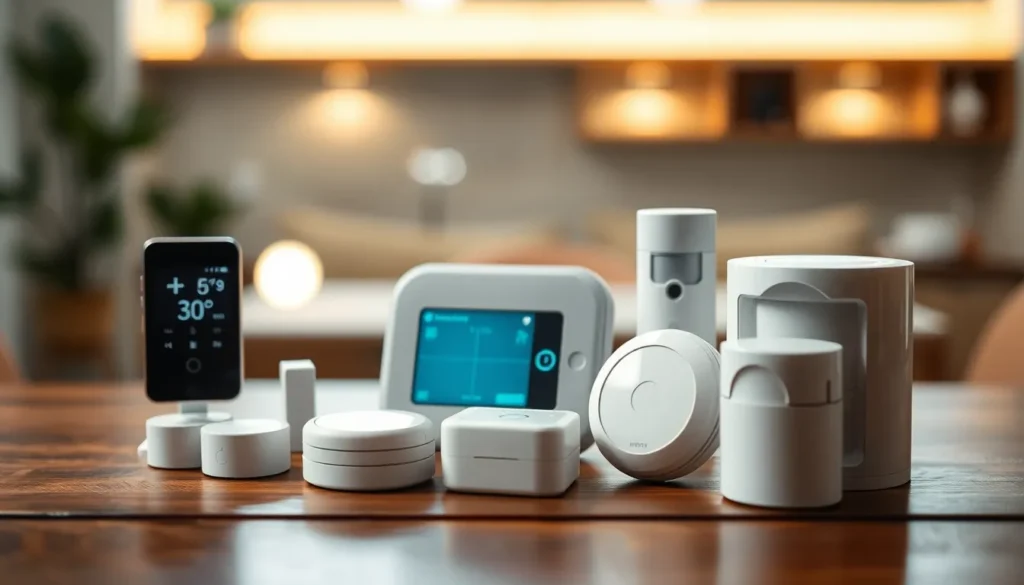
Understanding the key components of IoT architecture is essential for grasping its functionality and impact. Each element plays a vital role in enabling connected devices to interact smoothly.
Sensors and Devices
Sensors and devices serve as the foundation of IoT architecture. These components gather real-time data from the environment, transforming ordinary objects into smart entities. Embedded sensors in appliances, wearables, and vehicles track parameters like temperature, humidity, and motion. Devices process this information locally or send it to cloud storage for analysis. This connection fosters intelligent responses, enhancing user experiences and efficiency.
Connectivity Protocols
Connectivity protocols enable seamless data exchange between IoT devices and systems. Protocols like MQTT, CoAP, and HTTP facilitate communication, each designed for specific use cases. MQTT focuses on low bandwidth, making it ideal for resource-constrained devices. CoAP is optimized for constrained networks, supporting simple requests and responses. Choosing the right protocol depends on energy efficiency and data transmission needs, ensuring that devices communicate effectively.
Data Processing and Storage
Data processing and storage are crucial for managing the vast amounts of information produced by IoT devices. Edge computing processes data closer to the source, allowing for real-time analysis and faster decision-making. This reduces latency and bandwidth usage. In contrast, cloud computing provides scalable storage solutions and advanced analytics capabilities. A combination of these methods enhances the overall efficiency of IoT architecture, enabling swift responses and deeper insights into data trends.
Benefits of Internet of Things Architecture
IoT architecture enhances operational efficiency across various sectors. Smart devices optimize energy usage, reducing costs and minimizing waste. For example, smart thermostats automatically adjust settings based on user behavior, leading to significant energy savings.
Improved data insights come from the real-time data collection enabled by embedded sensors. These insights help organizations make informed decisions, driving productivity and innovation. Companies that leverage IoT data analytics often see higher profit margins and more effective resource allocation.
Scalability remains a key benefit of IoT architecture. Organizations can easily integrate new devices as needs evolve, ensuring systems stay current without extensive overhauls. This flexibility supports future growth, allowing for innovation in health care, manufacturing, and smart cities.
Enhanced security protocols protect sensitive data across IoT networks. Implementing encryption and authentication strengthens trust between devices and users. Organizations that prioritize security increase their reliability and credibility in the eyes of clients.
Real-time processing significantly improves response times. Edge computing allows for immediate data analysis, leading to quicker actions based on current conditions. This responsiveness benefits applications in healthcare and emergency services, where every second counts.
Data management becomes more efficient through cloud computing. Centralized storage solutions handle vast amounts of information from connected devices, offering scalable options for organizations. With this capability, businesses can focus on core functions without getting bogged down by data challenges.
Collaborative interaction between components creates a cohesive system. Each layer of IoT architecture—perception, network, edge computing, and application—works seamlessly to support device functionality. Such integration leads to comprehensive solutions that enhance user experiences across various applications.
Challenges in Implementing Internet of Things Architecture
Implementing Internet of Things (IoT) architecture presents various challenges that can hinder its effectiveness. Scalability concerns arise as organizations expand their connected device networks. More devices mean increased demands on data management systems, which might struggle without proper design.
Interoperability issues frequently cause setbacks. Different devices often use unique communication protocols that complicate data exchange. Ensuring compatibility among various components increases deployment complexity.
Security vulnerabilities pose significant risks. As more devices connect to the internet, opportunities for cyberattacks grow. Protecting sensitive data from unauthorized access requires robust encryption and authentication methods, which can be resource-intensive.
Data privacy concerns also arise. With extensive data collection from embedded sensors, organizations must establish clear guidelines for data usage. Failure to protect user information can damage trust and lead to regulatory challenges.
Network latency can impact performance. Real-time applications, especially in sectors like healthcare, demand immediate responses. Any delays in data processing or transmission may affect critical functions and outcomes.
Power consumption is another challenge, particularly for battery-operated devices. Ensuring energy efficiency while maintaining functionality can be difficult. Strategies to minimize energy usage are vital for long-term sustainability.
Maintaining system reliability is crucial. Frequent device disconnections or communication failures can disrupt operations. Building resilient networks and implementing redundancy measures help mitigate these risks.
Overall, addressing these challenges is essential for successful IoT architecture deployment. Organizations must navigate intricacies to foster innovation and ensure the benefits of connected devices are fully realized.
Future Trends in Internet of Things Architecture
Emerging trends in Internet of Things architecture point toward increased integration of artificial intelligence. AI enhances the capabilities of smart devices by enabling predictive analytics, which anticipates user needs based on data patterns. Significant advancements in machine learning contribute to device autonomy, allowing systems to adapt without human intervention.
Edge computing is gaining prominence as organizations seek faster response times. Processing data closer to the source minimizes latency, crucial in applications such as autonomous vehicles and healthcare monitoring. Cloud resources remain essential for extensive data management but will increasingly complement edge solutions for a balanced approach to processing.
Security measures are becoming more sophisticated. Advanced encryption techniques and multi-factor authentication strategies protect sensitive data against rising cyber threats. Continuous monitoring helps identify vulnerabilities, ensuring a proactive security posture.
Interoperability is set to improve through standardized protocols, enabling seamless communication across various devices. This shift fosters greater collaboration between manufacturers, simplifying the integration of new devices into existing networks.
Sustainability will influence architecture development, with a focus on energy-efficient devices and low-power communication protocols. Optimizing power consumption extends device lifespan and reduces environmental impact. Additionally, IoT solutions will increasingly emphasize data privacy, implementing stricter regulations to build user trust and comply with legal requirements.
Scalability remains a top priority as organizations expand their IoT networks. Modular architectures and cloud-based services facilitate the addition of new devices, adapting to evolving operational needs more efficiently. Overall, these trends will shape the future of IoT architecture, driving innovation and enhancing user experiences across industries.
The Internet of Things architecture plays a pivotal role in transforming everyday objects into smart devices that enhance user experiences. By leveraging key components like embedded sensors edge computing and robust communication protocols organizations can optimize operations and drive innovation across various sectors.
While the benefits are substantial challenges such as scalability interoperability and security must be addressed to ensure successful implementation. Looking ahead the integration of artificial intelligence and advancements in edge computing will further elevate IoT capabilities making systems more responsive and efficient.
As industries continue to evolve the importance of a well-structured IoT architecture cannot be overstated. It’s essential for harnessing the full potential of connected devices and shaping a smarter future.