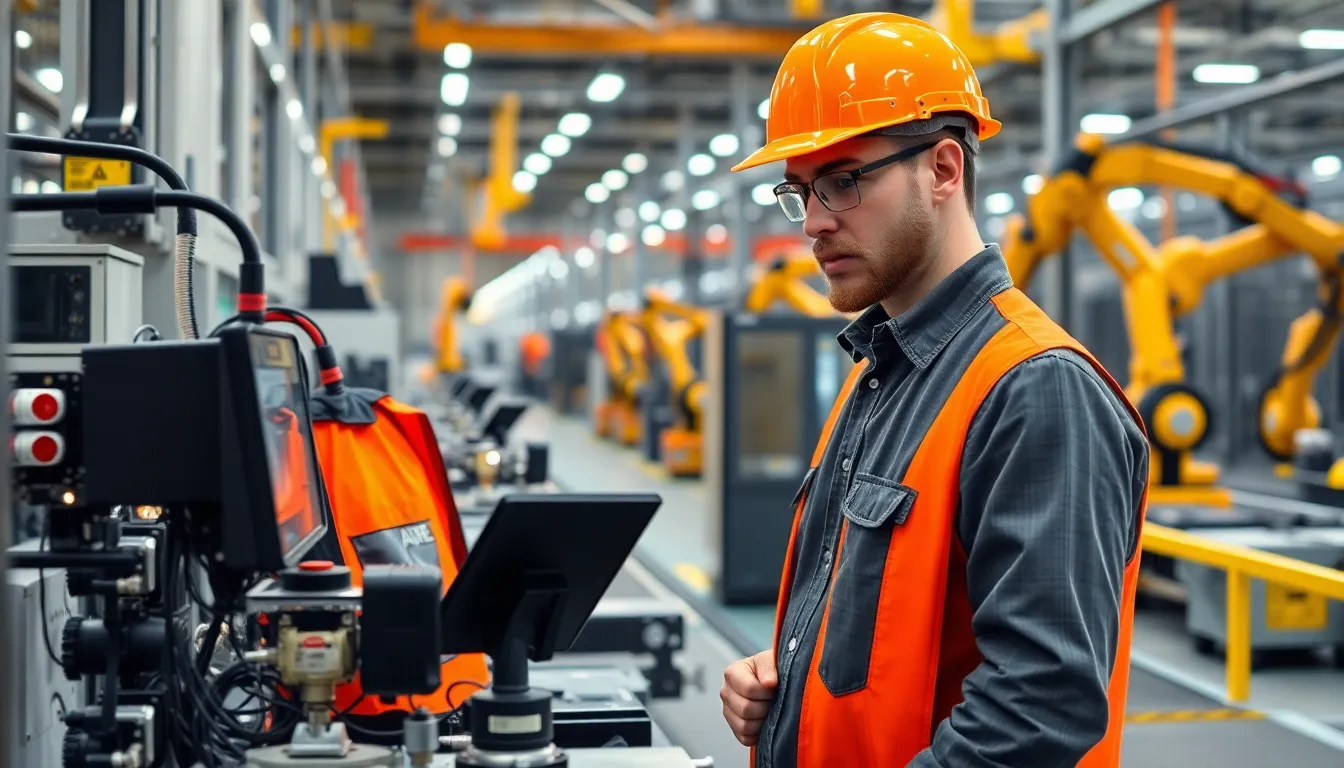
The Industrial Internet of Things (IIoT) is revolutionizing the way industries operate, making them smarter, more efficient, and surprisingly more entertaining. Imagine machines that talk to each other like old friends, sharing secrets about performance and maintenance. It’s like a high-tech gossip session, but instead of drama, they’re solving problems and boosting productivity.
Overview of Industrial Internet of Things
The Industrial Internet of Things (IIoT) integrates advanced sensors, software, and connectivity into industrial systems. This connectivity enables devices to communicate and share data seamlessly. Enhanced efficiency emerges from collecting and analyzing real-time data, allowing businesses to optimize processes and reduce downtime.
Sensors play a critical role in IIoT. They gather information ranging from temperature to equipment health. Such data enables predictive maintenance, which prevents equipment failures before they occur. By employing this technology, companies can significantly lower maintenance costs and improve operational reliability.
Connectivity options like Wi-Fi, Ethernet, and cellular networks facilitate real-time communication. These technologies allow for instant feedback loops between machines and operators. Such interactions enhance decision-making and streamline workflows across manufacturing and production environments.
Security remains a priority in the expansive landscape of IIoT. As industries adopt connected devices, protecting sensitive data from breaches becomes essential. Implementing robust security protocols mitigates risks associated with cyber threats, ensuring systems operate smoothly.
Implementation of IIoT solutions shows versatility across various industries. Manufacturing, logistics, and energy sectors utilize IIoT to improve visibility and efficiency. For instance, in manufacturing, smart factories leverage connected machinery to enhance productivity and reduce waste. In logistics, real-time tracking of shipments keeps operations flowing efficiently.
Long-term benefits of IIoT contribute to a more sustainable future. Companies not only reduce their environmental impact but also embrace innovative technologies that drive growth. Overall, the Industrial Internet of Things represents a shift toward smarter, more connected industrial platforms, ushering in a new era of productivity.
Key Examples in Manufacturing

The Industrial Internet of Things offers pivotal applications within manufacturing. Smart factories and predictive maintenance stand out as effective examples of IIoT implementation.
Smart Factories
Smart factories utilize interconnected devices that communicate through real-time data. These facilities automate production processes, permitting higher efficiency and reduced labor costs. Enhanced monitoring capabilities track machinery and inventory, fostering informed decision-making. Companies like Siemens and GE exemplify this approach, integrating IIoT sensors to improve operations. Automation not only reduces error rates but also increases production speed. Data analytics further supports these advancements, helping organizations anticipate market demands and optimize resources.
Predictive Maintenance
Predictive maintenance employs data from various sensors to assess equipment health continuously. Utilizing algorithms, organizations can analyze data trends, identifying potential failures before they occur. This proactive approach minimizes unplanned downtime, which negatively impacts productivity. Companies such as Bosch leverage predictive maintenance to lower operational costs through efficient resource management. Maintenance teams receive alerts on equipment performance, allowing timely interventions. By prioritizing smart maintenance strategies, manufacturers enhance operational reliability and extend equipment life.
Applications in Supply Chain Management
The Industrial Internet of Things (IIoT) significantly enhances supply chain management through improved visibility and efficiency. Various applications streamline operations across the supply chain.
Asset Tracking
Asset tracking optimizes the management of equipment and materials within the supply chain. Businesses implement IIoT-enabled sensors to monitor assets in real time, tracking their location and condition. Companies like Caterpillar employ GPS and RFID technology to automate asset management. This approach helps reduce losses, improve usage rates, and ultimately lowers operational costs. Utilization of data analytics further aids in forecasting maintenance needs, ensuring optimal performance throughout the asset’s lifecycle.
Inventory Management
Inventory management benefits from IIoT solutions that provide precise monitoring and control. Sensors detect stock levels and automatically send alerts when replenishment is necessary. Retailers, such as Walmart, utilize IIoT systems to enhance their inventory accuracy. These systems minimize stockouts, boost customer satisfaction, and reduce excess inventory. As data is collected, businesses gain insights into product trends, aiding in better purchasing decisions and efficient supply chain operations. Enhanced accuracy leads to streamlined fulfillment processes, increasing overall productivity.
Benefits of Industrial Internet of Things Examples
The Industrial Internet of Things offers several benefits that enhance industrial processes and operations significantly. These advantages range from improved efficiency to heightened safety measures.
Increased Efficiency
Increased efficiency represents a key benefit of IIoT implementations across industries. Real-time data collection enables businesses to monitor operations closely, allowing quick adjustments to optimize workflows. Predictive maintenance processes help organizations anticipate equipment failures, minimizing unexpected downtime. Companies, such as Siemens and GE, leverage interconnected devices that automate production, yielding faster output and reduced labor costs. Data analytics also facilitates informed decision-making, driving continuous improvement in operational performance. Smart factories showcase seamless integration of automated systems, resulting in precise resource allocation and timely response to production demands. Ultimately, these advancements contribute to enhanced overall productivity.
Enhanced Safety Measures
Enhanced safety measures stand out as a crucial advantage of IIoT applications. Sensors deployed in industrial environments continually monitor conditions, ensuring compliance with safety protocols. These devices can detect potential hazards, such as equipment malfunctions or environmental changes. Organizations can respond swiftly, addressing issues before they escalate. IIoT solutions also promote workforce safety by reducing human intervention in high-risk tasks. For instance, automated processes can handle hazardous materials, minimizing worker exposure to dangers. Firms employing IIoT technologies provide a safer work environment while maintaining efficiency. Furthermore, real-time alerts can inform staff of safety issues, reinforcing a proactive safety culture within the organization.
Challenges and Considerations
The Industrial Internet of Things (IIoT) presents several challenges that organizations must address to harness its full potential.
Connectivity Issues
Connectivity remains a primary challenge for IIoT implementations. Various industries depend on a reliable network infrastructure to ensure seamless data exchange between devices. Interference from environmental factors and physical obstructions can disrupt signals, leading to inconsistent data transmission. Moreover, not all industrial environments support robust internet connectivity, particularly remote locations. This limitation hampers real-time data analysis and communication. Organizations must evaluate their connectivity options, considering both Wi-Fi and cellular networks to support operational needs effectively.
Data Security
Data security poses a significant challenge in the IIoT landscape. With numerous connected devices, vulnerabilities may arise, making it easier for cyberattacks to target sensitive information. Employees often lack security awareness, contributing to potential breaches. It’s crucial for organizations to implement strong cybersecurity measures to protect data. Consistent software updates and robust encryption techniques enhance data integrity. Additionally, establishing strict access controls mitigates risks by ensuring only authorized personnel access sensitive data. Enhancing security measures will safeguard operational continuity and reinforce trust among stakeholders.
The Industrial Internet of Things is reshaping industries by driving efficiency and enhancing communication. With advanced sensors and real-time data analysis, organizations can optimize operations and reduce downtime. The integration of IIoT technologies not only streamlines processes but also promotes safety and sustainability.
As companies adopt IIoT solutions, they face challenges such as connectivity issues and cybersecurity threats. However, the long-term benefits far outweigh these obstacles. By embracing this transformative technology, businesses are not only improving their operational performance but also paving the way for a smarter and more connected industrial future.